
Statement regarding dolphin deaths observed in the Eastern Black Sea (2018)
Statement Regarding Dolphin Deaths in the Eastern Black Sea
PRESS RELEASE
Statement Regarding Dolphin Deaths in the Eastern Black Sea
In response to exaggerated reports of dolphin deaths in the media, the Turkish Marine Research Foundation (TÜDAV) deems it necessary to issue the following statement to inform the public accurately.
Istanbul, April 12, 2018 – The figures regarding the increasing number of dolphin deaths along the Black Sea coast in the last month do not reflect the truth. Because these reports, which are not based on scientifically proven data, are sensational and misleading, TÜDAV is presenting the following statement to the public and calling on media professionals to act responsibly.
Dolphin Deaths in Sinop
Reports in the press at the end of March claiming that 32 dolphins washed ashore in Sinop in a single day do not reflect the truth; there are no documents, photographs, or videos regarding the number of dead dolphins. However, Sinop University Faculty of Fisheries and our foundation are closely monitoring stranding cases in Sinop, and the total number of dolphins stranded in the Sinop region between March 20 and April 2 is 15.
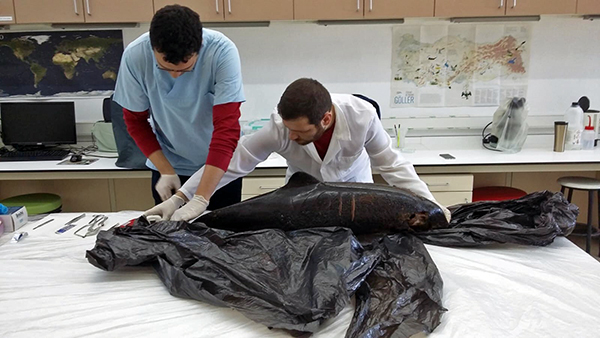
Necropsies performed on two dolphins by Research Assistant Uğur Özsandıkçı from Sinop University Faculty of Fisheries and Veterinarian Dr. Erdem Danyer from TÜDAV revealed that the cause of death was accidental entanglement in a net.
Necropsies (autopsies performed on animals) should be performed on every suspected case to determine the cause of death of the dolphins. Speaking about the cause of death in cases where necropsies have not been performed only creates speculation.
Dolphin deaths in Trabzon
The cause of death of two bottlenose dolphins that stranded in Akçaabat district of Trabzon on April 11 was also drowning due to accidental entanglement in a net.
Investigations into the effects of disease in these cases are ongoing. The purse seine fishing industry, which can interact with open-sea dolphins such as bottlenose dolphins, needs to be well-regulated. It is our expectation, based on the most humane feelings, that fishermen whose nets contain dolphins show the necessary dedication and prioritize the rescue of the dolphins.
It should be remembered that no dolphin death caused by humans is normal or natural, and every dolphin death must be reported to the Provincial and District Agricultural Directorates, Coast Guard units, relevant university departments, and civil society organizations working in this field.
Causes of Dolphin Deaths
There are three dolphin species in the Black Sea: bottlenose dolphins, bottlenose dolphins, and common dolphins. Bottlenose dolphins and common dolphins are coastal dolphins, while bottlenose dolphins are mostly open-sea dolphins.
The most important factor threatening the lives of dolphins in the Black Sea is "accidental entanglement" (bycatch). Bottlenose dolphins and, more often, common dolphins die accidentally from being caught in bottom trawls, especially in turbot fishing, during the spring. While porpoises can only detect nets from about 5 meters away using "echolocation," bottlenose dolphins can detect them from 30 meters away. Therefore, porpoise deaths are more common. Common dolphins, being open-sea dolphins, lose their lives in encircling nets like purse seines used to catch small pelagic fish such as anchovies.
While this interaction in purse seine fishing was almost nonexistent until 10 years ago, the increased competition over dwindling fish stocks due to excessive fishing activities has led to an increase in dolphin deaths.
Another possibility is disease. Mass deaths can occur as a result of illness in dolphins whose immune systems are weakened, particularly due to food scarcity and marine pollution. However, these cases do not indicate an epidemic. Nevertheless, monitoring and documenting deaths, and having experts perform necropsies on dead dolphins, is crucial to avoid missing a potential outbreak.
Intentional killing, i.e., shooting with firearms, is another cause of dolphin deaths. There is also a tremendous amount of misinformation in the media regarding this issue. Birds (e.g., seagulls) that land on dead dolphins floating on the sea surface first puncture their eyes, then try to make holes in their bodies. When the dolphin carcass washes ashore, these holes grow neatly due to decomposition and swelling, resembling bullet/shotgun pellet holes.
However, this should not mean that dolphins are not intentionally killed. Unfortunately, during our necropsy studies, we still encounter dolphins and Mediterranean seals that have been brutally killed with firearms, despite being protected. While the number of killed animals is increasing and the list is constantly growing, our reports and complaints about the issue go unanswered, and the perpetrators are still at large.
For this reason alone, three years ago we started a petition on change.org called "Fishing Without Weapons": www.change.org/SilahsizBalikcilik. Our aim is to ban land-based hunting weapons on fishing boats and The aim is to ensure the addition of the necessary clause to the relevant regulations governing fisheries.
We respectfully submit this to the public.
Contact Person:
Arda M. Tonay
About TÜDAV:
The Turkish Marine Research Foundation (TÜDAV) has been conducting scientific studies on dolphin and whale populations in Turkish seas for over 20 years. Its research on marine mammals in Turkey focuses on areas such as fishing interactions, population distribution and size, migration tracking in the Bosphorus (acoustic monitoring), photo-ID identification, genetic structure, skull collections, stomach contents, and conservation strategies. TÜDAV also conducts long-term studies on dead and injured marine mammals washed ashore and collaborates on joint projects with international organizations such as ACCOBAMS, UNEP, MedPAN, and CIESM, making its work a globally recognized institution.
PRESS RELEASE
Statement Regarding Dolphin Deaths in the Eastern Black Sea
In response to exaggerated reports of dolphin deaths in the media, the Turkish Marine Research Foundation (TÜDAV) deems it necessary to issue the following statement to inform the public accurately.
Istanbul, April 12, 2018 – The figures regarding the increasing number of dolphin deaths along the Black Sea coast in the last month do not reflect the truth. Because these reports, which are not based on scientifically proven data, are sensational and misleading, TÜDAV is presenting the following statement to the public and calling on media professionals to act responsibly.
Dolphin Deaths in Sinop
Reports in the press at the end of March claiming that 32 dolphins washed ashore in Sinop in a single day do not reflect the truth; there are no documents, photographs, or videos regarding the number of dead dolphins. However, Sinop University Faculty of Fisheries and our foundation are closely monitoring stranding cases in Sinop, and the total number of dolphins stranded in the Sinop region between March 20 and April 2 is 15.
Necropsies performed on two dolphins by Research Assistant Uğur Özsandıkçı from Sinop University Faculty of Fisheries and Veterinarian Dr. Erdem Danyer from TÜDAV revealed that the cause of death was accidental entanglement in a net.
Necropsies (autopsies performed on animals) should be performed on every suspected case to determine the cause of death of the dolphins. Speaking about the cause of death in cases where necropsies have not been performed only creates speculation.
Dolphin deaths in Trabzon
The cause of death of two bottlenose dolphins that stranded in Akçaabat district of Trabzon on April 11 was also drowning due to accidental entanglement in a net.
Investigations into the effects of disease in these cases are ongoing. The purse seine fishing industry, which can interact with open-sea dolphins such as bottlenose dolphins, needs to be well-regulated. It is our expectation, based on the most humane feelings, that fishermen whose nets contain dolphins show the necessary dedication and prioritize the rescue of the dolphins.
It should be remembered that no dolphin death caused by humans is normal or natural, and every dolphin death must be reported to the Provincial and District Agricultural Directorates, Coast Guard units, relevant university departments, and civil society organizations working in this field.
Causes of Dolphin Deaths
There are three dolphin species in the Black Sea: bottlenose dolphins, bottlenose dolphins, and common dolphins. Bottlenose dolphins and common dolphins are coastal dolphins, while bottlenose dolphins are mostly open-sea dolphins.
The most important factor threatening the lives of dolphins in the Black Sea is "accidental entanglement" (bycatch). Bottlenose dolphins and, more often, common dolphins die accidentally from being caught in bottom trawls, especially in turbot fishing, during the spring. While porpoises can only detect nets from about 5 meters away using "echolocation," bottlenose dolphins can detect them from 30 meters away. Therefore, porpoise deaths are more common. Common dolphins, being open-sea dolphins, lose their lives in encircling nets like purse seines used to catch small pelagic fish such as anchovies.
While this interaction in purse seine fishing was almost nonexistent until 10 years ago, the increased competition over dwindling fish stocks due to excessive fishing activities has led to an increase in dolphin deaths.
Another possibility is disease. Mass deaths can occur as a result of illness in dolphins whose immune systems are weakened, particularly due to food scarcity and marine pollution. However, these cases do not indicate an epidemic. Nevertheless, monitoring and documenting deaths, and having experts perform necropsies on dead dolphins, is crucial to avoid missing a potential outbreak.
Intentional killing, i.e., shooting with firearms, is another cause of dolphin deaths. There is also a tremendous amount of misinformation in the media regarding this issue. Birds (e.g., seagulls) that land on dead dolphins floating on the sea surface first puncture their eyes, then try to make holes in their bodies. When the dolphin carcass washes ashore, these holes grow neatly due to decomposition and swelling, resembling bullet/shotgun pellet holes.
However, this should not mean that dolphins are not intentionally killed. Unfortunately, during our necropsy studies, we still encounter dolphins and Mediterranean seals that have been brutally killed with firearms, despite being protected. While the number of killed animals is increasing and the list is constantly growing, our reports and complaints about the issue go unanswered, and the perpetrators are still at large.
For this reason alone, three years ago we started a petition on change.org called "Fishing Without Weapons": www.change.org/SilahsizBalikcilik. Our aim is to ban land-based hunting weapons on fishing boats and The aim is to ensure the addition of the necessary clause to the relevant regulations governing fisheries.
We respectfully submit this to the public.
Contact Person:
Arda M. Tonay
About TÜDAV:
The Turkish Marine Research Foundation (TÜDAV) has been conducting scientific studies on dolphin and whale populations in Turkish seas for over 20 years. Its research on marine mammals in Turkey focuses on areas such as fishing interactions, population distribution and size, migration tracking in the Bosphorus (acoustic monitoring), photo-ID identification, genetic structure, skull collections, stomach contents, and conservation strategies. TÜDAV also conducts long-term studies on dead and injured marine mammals washed ashore and collaborates on joint projects with international organizations such as ACCOBAMS, UNEP, MedPAN, and CIESM, making its work a globally recognized institution.


